Glass
HR++ glass or triple glazing: which is better for your Dutch home?
In short
- HR++ (Ug about 1.1) is the Dutch standard double insulating glass. Triple glass (often called HR+++, Ug about 0.6) loses roughly half as much heat.
- Going from old double glass to HR++ saves about €17 per m² of glass per year; from HR++ to triple about €5 more.
- Triple glass costs about €46 per m² of glass more, roughly €34 on a 100 × 120 cm window.
- With new frames the ISDE pays €111 per m² for triple instead of €25 for HR++, which usually covers the extra cost and more.
If you are getting new windows in the Netherlands, one of the first questions on the quote is the glass: HR++ or triple? The Dutch labels can be confusing if you are used to "double glazing" and "triple glazing", and the answer depends on more than insulation alone. Since 2026 the subsidy for triple glass in new frames is so generous that the sum often comes out differently than a few years ago. This guide explains the difference, what each saves, what it costs with us, and when we would choose which.
What HR, HR++ and HR+++ mean
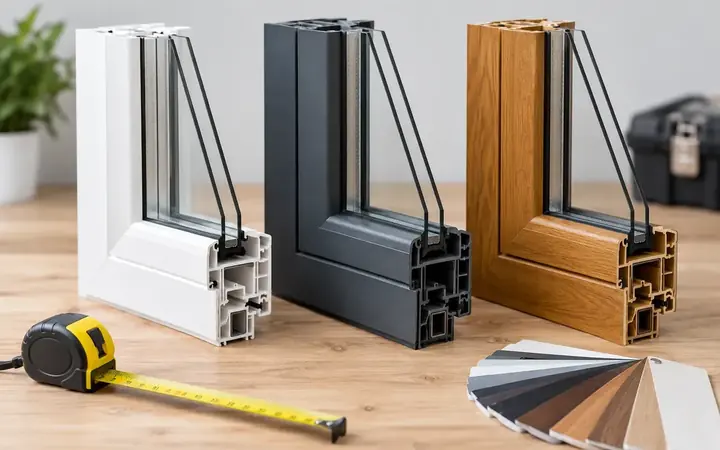
The Dutch label HR stands for hoog rendement, high efficiency. It is a marketing term rather than a legal standard, but in practice everyone uses it the same way:
| Dutch name | English | What it is | Ug value (approx.) |
|---|---|---|---|
| enkel glas | single glazing | one pane | 5.8 W/m²K |
| dubbel glas | old double glazing | two panes with air, no coating | 2.8 W/m²K |
| HR / HR+ | early insulating glass | two panes with a coating, from the 1980s and 1990s | 1.6 to 2.0 W/m²K |
| HR++ | insulating double glazing | two panes, argon gas and a heat-reflecting coating | 1.0 to 1.2 W/m²K |
| HR+++ / triple glas | triple glazing | three panes, two cavities, coatings and argon or krypton | 0.5 to 0.7 W/m²K |
The Ug value is the heat loss through the glass in watts per m² per degree of temperature difference. The lower, the better. Going from single glass to HR++ cuts the heat loss through the glass to about a fifth.
HR++ and triple compared
| Property | HR++ glass | Triple glass |
|---|---|---|
| Insulation (Ug) | 1.0 to 1.2 W/m²K | 0.5 to 0.7 W/m²K |
| Panes | 2, with coating and argon | 3, with coatings and argon or krypton |
| Weight | about 20 kg per m² | about 30 kg per m² |
| Light transmission | about 80% | about 70 to 75% |
| Solar heat let in | medium | lower |
| Glass surface temperature inside at 0 °C outside | about 17 °C | about 18.5 °C |
| ISDE subsidy (2026) | €25 per m² | €111 per m² in a new frame |
A warmer inside surface is the part you feel. Sitting next to a large triple-glazed window is noticeably more comfortable: less cold radiation, less draught along the glass (cold downdraught) and less condensation on the inside in winter.
How much each saves on heating
We calculated the heat loss per m² of glass for an average Dutch heating season of about 2,800 degree days, a high-efficiency gas boiler and a gas price of €1.40 per m³. Solar heat coming in through the glass is left out, so the real savings are a little lower than shown.
| Glass | Heat loss per m² per year | Gas per m² per year | Heating cost per m² per year |
|---|---|---|---|
| Single (5.8) | about 390 kWh | about 42 m³ | about €59 |
| Old double (2.8) | about 190 kWh | about 20 m³ | about €28 |
| HR++ (1.1) | about 75 kWh | about 8 m³ | about €11 |
| Triple (0.6) | about 40 kWh | about 4 m³ | about €6 |
So replacing old double glazing with HR++ saves about €17 per m² per year. A home with 17 m² of glass saves around €290 per year. Going one step further, from HR++ to triple, saves about €5 per m² per year, or around €85 for the same home. That is less dramatic, which is exactly why the subsidy matters so much in the decision. With a heat pump the savings in euros are lower per kWh, but a low heat demand matters more, because the heat pump works best at low water temperatures.
What triple glass costs extra
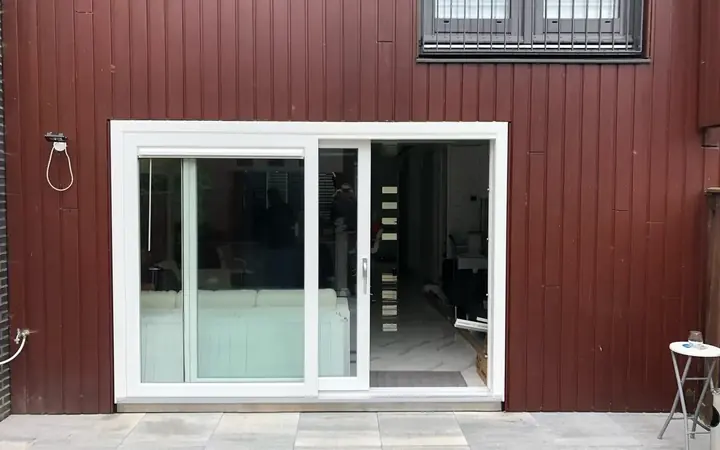
In our uPVC windows triple glass costs about €46 per m² of glass more than HR++. On a tilt and turn window of 100 × 120 cm that is about €34. On a sliding door it is about €39 per m² of door, on a back door or a pair of French doors about €72 per door. Our Premium range and our lift and slide doors have triple glass as standard, so there is no extra cost there.
| Window, 100 × 120 cm, incl. VAT | HR++ | Triple |
|---|---|---|
| Basic range | €543 | €577 |
| Comfort range (Aluplast Ideal 7000 NL) | €619 | €653 |
| Premium range (Aluplast Ideal 8000 NL) | n/a | €655 (standard) |
How the subsidy changes the sum
For HR++ glass the ISDE pays €25 per m², for triple or vacuum glass in a new frame €111 per m², measured including the frame. That difference of €86 per m² is often larger than the extra cost of the glass. With a second insulation measure within 24 months the difference doubles to €172 per m².
| Semi-detached house, 9 new windows (16 m² incl. frames) | HR++ | Triple |
|---|---|---|
| Extra cost of the glass (Comfort) | about €462 | |
| ISDE subsidy, one measure | €400 | €1,776 |
| Net difference | triple is about €914 cheaper |
With the current subsidy, triple glass in new frames is therefore usually not more expensive than HR++, and often cheaper, before you count the lower heating bill. The full rules are in our ISDE subsidy guide. One caveat: the RVO plans to lower the triple amount to €55 per m² in 2027. A signed order on or before 31 December 2026 keeps €111.
When to choose which
Choose triple glass if
- you are getting new frames anyway, so you qualify for the high ISDE amount;
- you have a heat pump or plan to get one, because a low heat demand is extra important;
- the windows face north or east, where little solar heat comes in;
- you have large windows next to a sofa or dining table and feel cold downdraught;
- you plan a second insulation measure within two years, which doubles the subsidy.
Choose HR++ glass if
- you only replace the glass in existing frames that cannot carry triple glass;
- the windows face south and you like the free solar heat in winter;
- it concerns a front door: triple glass usually does not fit in the door panel;
- it is about a few small windows where the difference per window is small and you stay under 3 m².
Condensation on the outside
A common surprise with triple glass: on cold, clear mornings there can be condensation on the outside of the glass. That is not a defect. It happens because so little heat escapes that the outer pane gets as cold as the night air, and dew forms on it just like on a car windscreen. It disappears within an hour or two once the sun is up. Condensation on the inside, on the other hand, points to a humid home and poor ventilation, and new windows with a warmer glass surface reduce it. Condensation between the panes means the seal of the unit has failed and the unit must be replaced; that is covered by the glass warranty.
Noise, weight and light
- Noise: triple glass is not automatically quieter. Sound insulation depends mainly on the thickness and the difference in thickness between the panes, and on laminated acoustic glass. Near a busy road or railway, ask for acoustic glass; it can be combined with HR++ or triple.
- Weight: triple glass weighs about half as much again. The frame and hinges must be made for it. Our Comfort (84 mm) and Premium (94 mm) profiles are; most old frames are not.
- Light: triple glass lets through about 70 to 75% of the light, against about 80% for HR++. In a normal room you will hardly notice it; in a dark north-facing room you might.
- Safety: both types can be ordered with laminated glass on one side, which stays in place when it breaks and helps against burglary.
Keeping your frames: vacuum glass
If your timber frames are in good condition, or you live in a listed building, vacuum glass is an alternative. It is only a few millimetres thick, so it fits in many existing frames, and it insulates about as well as triple glass. It is considerably more expensive per m², and in existing frames it only earns the HR++ subsidy of €25 per m². In new frames it earns the same €111 as triple glass.
Glass in our windows and doors
Our Basic and Comfort ranges come with HR++ glass as standard (Ug 1.1), with triple glass as an option per window. Premium, an Aluplast Ideal 8000 NL profile of 94 mm, has triple glass as standard and reaches a Uw value down to 0.93 W/m²K for the whole window. Uw is the value of the complete window including the frame, which is always a bit higher than the Ug of the glass alone. Our lift and slide doors have triple glass as standard; our front doors have HR++ glass. At the measuring visit we put the extra cost and the subsidy side by side for your home, in English. Prices per window are in our price list and on the window frames page.
Savings are estimates for an average Dutch home and depend on your heating, gas price and habits. Subsidy amounts: RVO, checked November 2026.
Frequently asked questions
Is triple glass better than HR++?
It insulates about 40 to 50% better, keeps the inside surface warmer and reduces condensation inside. It is heavier, lets in a little less light and costs more, but with the ISDE subsidy for new frames it is often the cheaper choice.
What does HR+++ mean?
HR+++ is the common Dutch name for triple insulating glass, with a Ug value around 0.5 to 0.7 W/m²K.
How much does triple glass cost compared to HR++?
In our uPVC windows about €46 per m² of glass more, roughly €34 on a 100 × 120 cm tilt and turn window. In our Premium range and lift and slide doors triple glass is standard.
Why is there condensation on the outside of my new windows?
Because triple glass insulates so well that the outer pane gets as cold as the night air. Dew forms on it on cold, clear mornings and disappears during the day. It is a sign of good insulation, not a defect.
Can I put triple glass in my existing frames?
Often not. Triple glass is thicker and heavier, and old frames usually lack the depth and the hinges for it. Vacuum glass fits many existing frames instead. Either way, in existing frames you get the HR++ subsidy, not the triple amount.
Is triple glass worth it with a heat pump?
Usually yes. A heat pump works best with a low heat demand and low water temperatures, and triple glass reduces both heat loss and cold downdraught near large windows.