Amsterdam
Replacing windows in Amsterdam: monuments, VvE, permits and costs
In short
- Most of Amsterdam is apartments, so for most owners the VvE decides on the frames, not just you.
- Inside the canal ring (UNESCO World Heritage) and in other protected townscapes, a change to the street facade usually needs a permit and often timber or slim aluminium instead of uPVC.
- Outside protected areas, replacing like for like is usually permit-free, and uPVC is the most affordable choice.
- Four windows for a typical Amsterdam apartment cost about €5,900 installed in uPVC; a monument with slim aluminium or timber costs roughly 1.5 to 2.5 times as much.
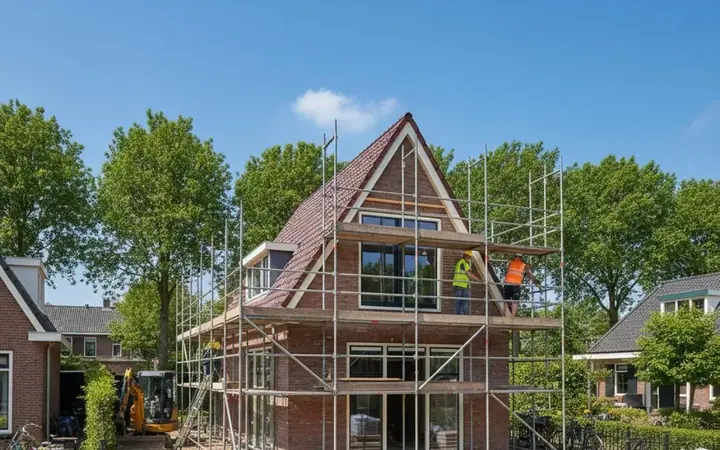
- Plan for scaffolding and a loading spot. Narrow streets and canals make logistics the hidden cost in Amsterdam.
Replacing windows in Amsterdam is not the same as replacing windows in a suburban street in Brabant. The city has thousands of listed buildings, a canal ring on the UNESCO World Heritage list, large protected townscapes, and a housing stock that is mostly apartments in buildings with an owners association. Add narrow streets, canals instead of parking spaces and steep stairs, and the practical side becomes as important as the window itself. This guide covers what is specific to Amsterdam. For general prices, subsidy and glass we link to our other guides, so you get the full picture without reading the same thing twice.
Why Amsterdam is different
Three things make window replacement in Amsterdam different from most Dutch towns:
| Factor | What it means for you |
|---|---|
| Many listed buildings and protected areas | More streets where the appearance of the facade is protected, so material, profile width, glazing bars and colour matter |
| Mostly apartments | The facade and often the frames are common property, so the owners association (VvE) has to approve |
| Dense, old streets | Scaffolding on the pavement, loading by the canal, steep stairs and hoisting beams all need planning |
| Many international owners | Decisions in Dutch, documents in Dutch; a supplier who explains things in English saves time |
None of this makes it impossible. It mainly means you need to check a few things before you order, and that you should choose a supplier who has done it before.
Amsterdam homes and their windows
What is possible depends a lot on when your building was built. Roughly, Amsterdam has five types of housing, each with its own windows and its own rules:
| Period and area | Typical windows | What usually works |
|---|---|---|
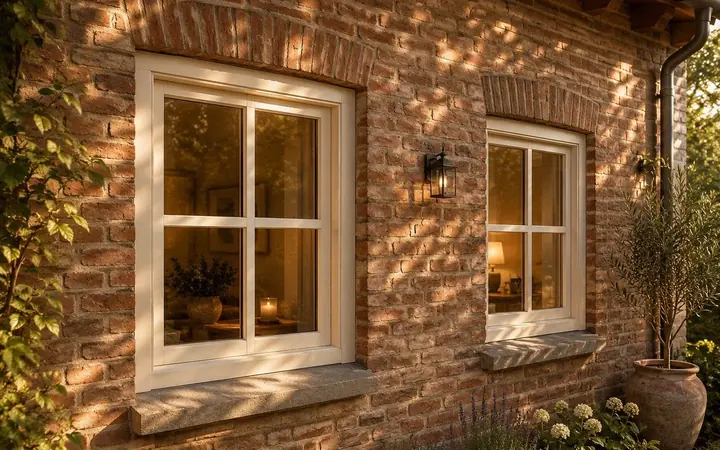
| Before 1900: canal ring, Jordaan, old centre | Tall timber sash windows, small panes, glazing bars, often single glass | Timber or slim monument profiles, monument glass, permit usually needed on the street side |
| 1900 to 1940: De Pijp, Oud-West, Amsterdam School in Zuid and Oost | Timber frames with characteristic divisions, top lights, sometimes stained glass | Timber or uPVC with the same division at the back; front often protected townscape |
| 1950 to 1970: Nieuw-West, Slotermeer, Osdorp, Buitenveldert | Wide timber or steel frames, large panes, simple divisions | uPVC or aluminium, usually permit-free, VvE standard per block |
| 1970 to 2000: Bijlmer, Noord, Zuidoost, later blocks | Timber or aluminium frames, often with panels under the windows | uPVC or aluminium, like for like; panels under windows can be replaced by insulated panels |
| After 2000: IJburg, Zeeburg, Houthavens, Noord new builds | uPVC or aluminium, already insulated | Mostly repairs, glass upgrades or adding doors and fly screens |
If you are not sure how old your building is, the Kadaster and the municipality's map viewer show the construction year, and the Rijksmonumenten register shows whether it is listed.
Listed buildings and the canal ring
Amsterdam has thousands of national monuments (rijksmonumenten) and municipal monuments (gemeentelijke monumenten), and the seventeenth-century canal ring is UNESCO World Heritage. Large parts of the city outside the ring are protected townscapes (beschermd stadsgezicht). In these areas the municipality wants the street view to keep its historic character, and windows are one of the most visible parts of it.
In practice this means:
- The sightlines count. The width of the frame and sash as seen from the street should stay close to the original. A standard uPVC window is often too wide.
- Glazing bars must look real. Where the old windows have small panes, the new ones need glazing bars on the outside of the glass, not just a grid between the panes.
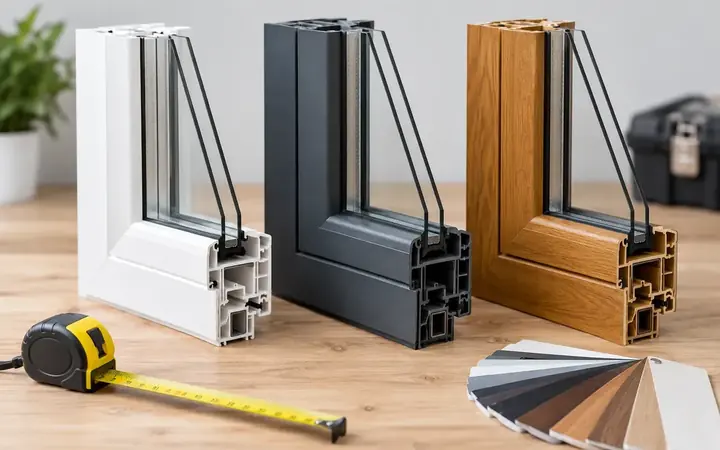
- The material is often specified. For listed buildings timber is the default. Slim aluminium systems designed for monuments are sometimes accepted for rear facades or later additions. uPVC is rarely accepted on a listed street facade.
- Glass can be thin. Monument glass and vacuum glass keep the thin look of old windows while insulating far better than single glass.
- The commission decides. Applications in protected areas are reviewed by the city's commission for spatial quality and, for monuments, by heritage advisers. Drawings with the exact sightlines help.
From a recent Amsterdam request
An owner of a listed canal-side building asked us for two rear windows that the heritage commission would accept. The solution was a slim aluminium system for monuments with glazing bars applied to the outside of the glass and a visible frame plus sash of about 67 mm, with drawings the owner could submit with the permit application. The rear facade is often where a modern but slim solution is allowed; the street side usually stays timber.
Have a listed building? Start with the permit, not the quote. We are happy to supply a specification and drawings for your application before anything is ordered.
Permits: when you need one
For most Amsterdam homes outside protected areas, replacing windows in the same opening with a similar look is permit-free. You usually need an environmental permit (omgevingsvergunning) when:
| Situation | Permit? |
|---|---|
| National or municipal monument, any facade | Yes, for anything that changes the monument |
| Protected townscape, street-facing facade, different look | Usually yes |
| Protected townscape, rear facade not visible from public space | Often not, check the omgevingsplan |
| Outside protected areas, same opening, similar look | Usually not |
| New opening, larger window or a door where there was a window | Often yes, plus structural check |
Always check your address in the Omgevingsloket permit check. Processing usually takes up to eight weeks, and can be extended by six. Build this into your planning: in Amsterdam the permit, not the production of the windows, is often the slowest step. The general rules for permits in the Netherlands are explained in our main guide.
Timber, aluminium or uPVC in Amsterdam
Which material makes sense depends on your building more than on taste:
| Material | Best for in Amsterdam | Watch out for |
|---|---|---|
| Timber | Listed buildings, canal houses, street facades in protected areas | Highest price, repainting every 6 to 8 years |
| Slim aluminium (monument systems) | Rear facades of monuments, large glass, modern additions | Price, and acceptance per case |
| uPVC (block frame, wood grain possible) | Post-war blocks, Nieuw-West, Noord, Zuidoost, rear facades outside protected areas | Often not accepted on protected street facades |
A uPVC tilt and turn window of 100 × 120 cm costs €619 in our Comfort range, an aluminium one from €848, both incl. VAT and excl. installation. Monument timber or monument aluminium is priced per project. The full comparison is in uPVC or aluminium windows.
Apartments and the VvE
In most Amsterdam apartment buildings the facade and the frames are common parts, so the owners association has to approve replacement, and often has a standard for colour and layout. Many Amsterdam VvEs are small (a canal house split into three or four apartments) and some are inactive; you still need the written consent of the other owners. The full step by step, who pays and what the deed of division says, is in our guide replacing windows in an apartment.
Two Amsterdam tips:
- Combine with your neighbours. In a building of three or four apartments, one scaffold and one permit application for the whole facade is cheaper per apartment and gives a uniform result the commission likes.
- Check leasehold only for structural changes. Most Amsterdam land is leasehold (erfpacht). Replacing windows is maintenance and does not affect it; changing the use or volume of the building can.
Scaffolding, parking and access
This is where Amsterdam really differs. Practical points we plan for every Amsterdam job:
- Loading and unloading. Parking in central Amsterdam is scarce and expensive. We plan a loading spot, sometimes early in the morning, and keep the van time short.
- Scaffolding on public ground. A scaffold or materials on the pavement or street usually needs a permit or notification from the city. It takes time to arrange, so we start early. For upper floors with a mobile scaffold or tower we charge €181.50 incl. VAT; a full facade scaffold is priced separately.
- Hoisting. Many canal houses have a hoisting beam, but large frames often go up with a small crane or a furniture lift instead of the narrow stairs. Only when needed, and always agreed in advance.
- Working hours and neighbours. We follow the house rules of your building and the city rules on noise, and tell the neighbours a few days ahead.
- Old materials. In buildings from before 1994, old putty or panels can contain asbestos. If in doubt, have it inspected before work starts.
What it costs in Amsterdam
The window prices are the same as anywhere in the Netherlands. What differs is the extra work around them. These are our prices incl. 21% VAT, in white with HR++ glass:
| Home | Windows and doors | Installation | Total |
|---|---|---|---|
| Apartment, 4 windows (Nieuw-West, Noord, Zuidoost) | €3,153 | €2,783 | €5,936 |
| Terraced house, 6 windows and 2 doors (Noord, Buitenveldert) | €8,186 | €6,824 | €15,010 |
On top of this, in Amsterdam, count on:
| Extra | Indication incl. VAT |
|---|---|
| Mobile scaffold or tower for upper floors | €181.50 |
| Full facade scaffold for a canal house | priced per project |
| Crane or furniture lift, if needed | priced per project, always agreed beforehand |
| Timber or monument aluminium instead of uPVC | roughly 1.5 to 2.5 times the uPVC price |
| Drawings for a permit application | free with an order |
A per-type price list is on our prices page, and four whole-house examples are in what new windows cost.
Subsidy and glass
Amsterdam owners get the same national ISDE subsidy as everyone else: €111 per m² for triple glass in new frames, €25 for HR++, from 3 m², for owner-occupiers who pay themselves. For monuments, thin monument or vacuum glass can also qualify if the U-value is low enough. Details in our ISDE guide; whether HR++ or triple is better for you is in HR++ or triple glazing.
A realistic planning
| Step | Typical time in Amsterdam |
|---|---|
| Quote based on photos and sizes | 1 working day |
| VvE approval | 2 to 8 weeks, depending on the next meeting |
| Permit (only if needed) | up to 8 weeks, sometimes 14 |
| Measuring on site | within 1 to 2 weeks |
| Production | 2 to 6 weeks for uPVC and aluminium, longer for monument timber |
| Scaffold or street permit | arranged during production |
| Installation | usually 1 day per apartment |
Glass for Amsterdam homes
Two things make glass choice in Amsterdam a little different. First, noise: trams, busy streets, nightlife and, in the south and west, aircraft. Second, the many old buildings, where the glass has to look thin. A quick guide:
| Situation | What we would choose | Why |
|---|---|---|
| Apartment on a busy street or tram route | Acoustic triple or HR++ with a laminated pane | About 36 to 40 dB instead of about 31 dB |
| Listed building, street facade | Monument or vacuum glass in timber or slim frames | Thin look, much better insulation than single glass |
| Post-war block, west or north | Triple glass | Comfort and the highest subsidy |
| Ground floor or easy to reach | Laminated glass on the inside | Burglary resistance, needed for the Police Quality Mark |
| Large windows facing south or west | HR++ or triple with sun control coating | Less overheating in summer |
Checklist before you order
- Is the building listed or in a protected townscape? Check the monument register and the Omgevingsloket.
- Who owns the frames? Read the deed of division and ask the VvE for its standard.
- Which facade? Street side and rear can have different rules and different solutions.
- How do the frames get in? Stairs, lift, hoisting beam or crane: decide before production.
- Where does the van stop? Loading spot and, if needed, a street or scaffold permit.
- Ventilation? Trickle vents where the old windows let in air.
- Subsidy paperwork? Keep the invoice with the glass U-value for the ISDE.
Common mistakes in Amsterdam
- Ordering uPVC for a protected street facade without checking. It may have to come out again.
- Fake glazing bars on a monument. Bars between the panes are rarely accepted where the originals had real bars.
- Forgetting the street. No loading spot or scaffold permit means a lost installation day.
- Going alone in a small VvE. Doing the whole facade together is cheaper and easier to get approved.
- Losing ventilation. Old Amsterdam windows leak air; new ones need trickle vents to avoid condensation.
This guide is general information. What applies to your address is in the omgevingsplan and, for apartments, in your deed of division.
Frequently asked questions
Do I need a permit to replace windows in Amsterdam?
Outside protected areas, replacing windows in the same opening with a similar look is usually permit-free. For listed buildings, and for street facades in the canal ring or another protected townscape, you usually need an environmental permit. Check your address in the Omgevingsloket.
Can I put uPVC windows in a canal house?
On the street facade of a listed canal house, rarely. Timber is the default there, sometimes slim monument aluminium. On a rear facade or in a non-listed building outside protected areas uPVC is often fine.
Who decides on new windows in an Amsterdam apartment?
Usually the owners association (VvE), because the facade and frames are common parts. Even in a small canal house with three owners you need written consent.
What do new windows cost in Amsterdam?
The same per window as elsewhere: a uPVC tilt and turn window of 100 × 120 cm costs €619 incl. VAT. Four windows for an apartment cost about €5,900 installed. Scaffolding, a crane or monument materials come on top.
Do you work in central Amsterdam?
Yes. We plan loading, scaffolding and access per address and install anywhere in Amsterdam, including the canal ring, with quotes and drawings in English.
Is there subsidy for windows in a monument?
The national ISDE applies to monuments too, if the glass meets the U-value. Some municipalities also have restoration loans for monuments; ask the city or the National Restoration Fund.